
How to Strengthen the Legs for Everyday Tasks?
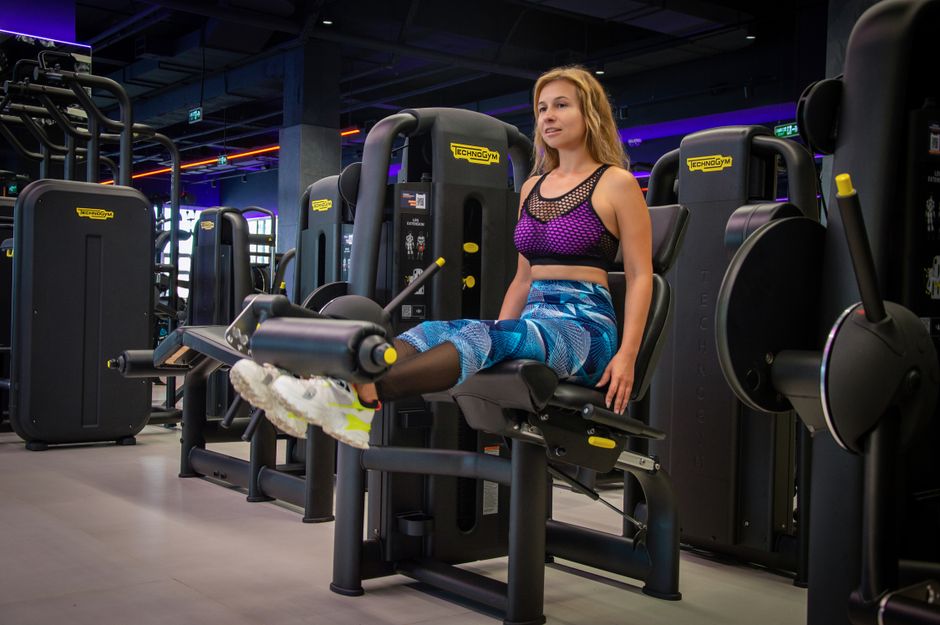
To learn how to strengthen the legs, train the quads, hamstrings, glutes, and calves with a mix of squat, hip-hinge, single-leg, and calf-raise movements. Start with bodyweight or a manageable resistance that allows 8–12 controlled repetitions, then add resistance gradually when the work becomes easy. The CDC recommends strengthening all major muscle groups, including legs and hips, at least 2 days per week.
What exercises strengthen all the major muscles in my legs?
Squats, hip hinges, single-leg exercises, and calf raises together cover the main leg muscle groups. A squat pattern trains the front of the thighs and hips; a hinge pattern works the back of the thighs and glutes; single-leg work challenges each side; and calf raises directly load the calves.
These patterns can be adapted to the equipment available. A chair squat or sit-to-stand is a bodyweight squat option; holding a dumbbell adds resistance. A hip hinge can begin as a bodyweight movement and progress to a dumbbell Romanian deadlift. Step-ups or supported split squats provide single-leg work, while standing calf raises can be done with bodyweight or added load.
Machines offer another route. The leg press trains a bilateral squat-like pattern, while a seated or lying leg curl emphasizes knee-bending work for the hamstrings. A machine can make it simpler to adjust resistance in small increments, while free-weight and bodyweight movements require the person to control more of the movement. The choice depends on access, comfort, and the ability to perform controlled repetitions.
Evidence supports including both bilateral movements, which use both legs together, and unilateral movements, which train one leg at a time. In an 8-week study published in 2005, McCurdy and colleagues found similar early improvements in leg strength and power among untrained adults assigned to unilateral or bilateral lower-body training. This does not make the exercises identical; it shows that either approach can contribute to early strength development.
How should a beginner start strength training their legs?
A beginner can start with movements they can perform smoothly and safely, using bodyweight or a light resistance. The load is appropriate when the final repetitions are challenging, but the person can still complete them without help and without losing control.
The CDC's adult activity guidance recommends muscle-strengthening activity at least 2 days per week and says to work all major muscle groups, including legs and hips. It gives 8–12 repetitions per activity as a practical set range and says to do at least one set; 2–3 sets provide additional benefits. The guidance also recognizes bodyweight, resistance bands, and weights as ways to provide resistance. See the CDC guidance on what counts as physical activity.
For a simple starting session, choose one movement from each pattern: a squat, a hinge, a single-leg exercise, and a calf raise. Begin with a set of each, using a range of motion that stays controlled. If an exercise cannot be done with steady form, make it easier: use a chair for squats, hold a stable support for step-ups, or reduce the range of motion.
The CDC and Tufts University guide Growing Stronger illustrates a gradual path from bodyweight exercises to dumbbells and ankle weights. Its schedule for older adults starts with bodyweight training 2–3 times per week for at least 2 weeks before advancing to a weighted phase. That schedule is a model for progression, not a universal timeline for every adult. The guide notes that a weight may be too heavy if fewer than 8 repetitions are possible, and heavier resistance can be considered when more than 10–12 repetitions become easy.
Novice resistance-training guidance from the American College of Sports Medicine (ACSM), published in 2009, also places beginners in an 8–12 repetition range and generally recommends training 2–3 days per week. These recommendations give a usable starting point; a new exerciser can adjust the load, movement, and amount of work to match current ability.
How many sets and repetitions should I do to strengthen my legs?
For general strength training, start with 8–12 repetitions per set and at least one set of each chosen exercise. The CDC says 2–3 sets provide additional benefits, while ACSM's 2009 position stand recommends novice lifters use a resistance that allows 8–12 repetitions. The final repetitions should be difficult without requiring assistance.
| Training aim | Starting point in the sources | How to use it |
|---|---|---|
| General beginner strength | 8–12 repetitions; at least 1 set | Choose a load that makes another repetition difficult while form remains controlled. |
| More total work | 2–3 sets | Add sets gradually when the current workload is manageable. |
| Muscular endurance | More than 15 repetitions with lighter-to-moderate loads | This emphasizes sustaining repeated effort rather than lifting a heavier load for fewer repetitions. |
The table separates strength-focused practice from muscular endurance. ACSM describes endurance training as lighter-to-moderate loads—40–60% of one-repetition maximum—for more than 15 repetitions, with rests under 90 seconds. That prescription is a research-based training description, not a requirement for every general fitness routine. For adults seeking everyday strength, a controllable 8–12 repetition range is simpler to apply.
Progression matters because the same load becomes less demanding as capacity improves. ACSM's 2009 guidance recommends increasing resistance by 2–10% when a person can complete 1–2 repetitions beyond the target with the current load. The practical sequence is to first build consistent, controlled repetitions; then add a small amount of resistance and return to the lower end of the range.
Strength gains do not depend on one exercise alone. In a study of 120 men published in 2017, an 8-week supervised program comparing squats with leg presses found that both training groups improved maximum dynamic strength. The finding supports using a suitable squat or machine alternative; the study's young male participants and supervised setting do not establish the same timeline or response for every adult.
Frequently Asked Questions
How can I make leg exercises harder as I get stronger?
First add repetitions within your target range while keeping each repetition controlled. When you can do 1–2 repetitions beyond the target with the current load, ACSM guidance recommends increasing the load by 2–10%. You can also move from bodyweight to a band, dumbbell, or machine, as long as the new resistance still allows sound technique.
Should I train my quads, hamstrings, glutes, and calves separately?
Not necessarily. Squats and step-ups train several leg muscles at once, while hinges emphasize the back of the thighs and glutes and calf raises target the calves more directly. A routine that covers these movement patterns can train the major groups without a separate exercise for every muscle.
How long does it take to notice stronger legs?
The available studies show measurable strength improvements within supervised programs lasting 8 weeks, but they do not establish a guaranteed timeline for every person. Starting level, consistency, resistance, and recovery all affect progress. Track a repeatable task or exercise over time rather than assuming one schedule fits everyone.
Sources
- Centers for Disease Control and Prevention, What Counts as Physical Activity for Adults
- American College of Sports Medicine, Progression Models in Resistance Training for Healthy Adults
- McCurdy et al., Unilateral versus bilateral strength training
- CDC and Tufts University, Growing Stronger: Strength Training for Older Adults
- Wirth et al., Squat and leg-press training study
Disclaimer: This article is for general information only and is not medical advice. It is not a substitute for diagnosis or treatment by a qualified healthcare professional. Always speak to your doctor before acting on anything you read here.
Keep reading
How to Strengthen Leg Muscles at Home
Strengthen your legs at home with bodyweight squats, hinges, split-stance moves and calf raises, progressing gradually at least two days a week.

What Does Quitting Cigarettes Cold Turkey Feel Like Day by Day?
A practical timeline for cigarette withdrawal, cravings, mood changes, trigger plans, treatment options, and when to seek medical help.

Can I Take Supplements During Chemotherapy or Radiation?
A practical guide to reviewing vitamins, antioxidants, herbs, and mushroom supplements during cancer treatment.
How Do I Choose Senior Dance Classes?
Choose senior dance classes by beginner support, movement options, access, and cost; ask about adaptations and trial sessions before enrolling.